ABOUT OLD SAN JUAN BAY
San Cristobal Castle and El Morro
Rising almost 150 feet above sea level, the Castillo de San Cristóbal is a massive structure that occupies most of the northeast edge of Old San Juan. Built mainly over a 20-year period (1765-1785), San Cristóbal was over 200 years newer than El Morro, Puerto Rico’s military stalwart at the time.
Yet it was a much-needed addition to the city’s defenses. While El Morro guarded the bay, San Cristóbal watched over the land east of Old San Juan. Building a fortification that protected the city from a land invasion proved to be a wise move. In 1797, the fort helped repel an invasion by Sir Ralph Abercrombie.
From an architectural perspective, San Cristóbal’s design was ingenious, and followed a model known as “defense-in-depth.” The castle is comprised of several layers, each walled and stoutly fortified to frustrate and slow an enemy not once, but several times. A walk through the fort today will show you its unusual but effective layout.
The fort has seen its share of battles. It fired the first Spanish shot of the Spanish-American War. During World War II, the U.S. added fortifications to its outer walls. Through it all, it has stood the tests of time and war.
Today, from the parapet of San Cristóbal you can gaze over the barrel of a canon at cruise ships docking in the San Juan Bay, or at El Morro on the eastern edge of the old city. You can step inside a garita, or sentry box, and look out over the water. And you can see Old San Juan spread out before you.
La Fortaleza - Santa Catalina Palace (Governors’ House)
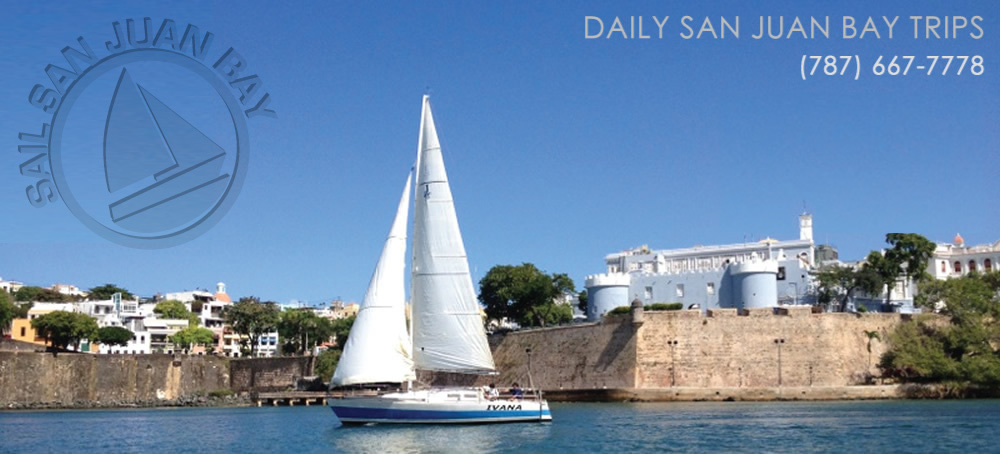
La Fortaleza (The Fortress) is the current official residence of the Governor of Puerto Rico. It was built between 1533 and 1540 to defend the harbor of San Juan. The structure is also known as Palacio de Santa Catalina (Santa Catalina’s Palace). It is the oldest executive mansion in the New World. It was listed by UNESCO in 1983 as part of theWorld Heritage Site ”La Fortaleza and San Juan National Historic Site”.
La Fortaleza was the first defensive fortification built for the city of San Juan, and the first of a series of military structures built to protect the city which included the Fort San Felipe del Morro and the Fort San Cristóbal. The construction was authorized by Charles V, Holy Roman Emperor as a defense against attacks from Carib Indians and the European powers of the time.
Isla de Cabra (Goat’s Island)
It is hard to pinpoint what makes a visit to Isla de Cabras such an interesting hop across the San Juan Bay, but the best guess would have to be its location, sitting at the western end of the bay’s entrance. There is no better vantage point for a panoramic view of the majestic capital city of San Juan as it stands today, as well as for a glimpse into the Spanish colonial past of Puerto Rico.
Isla de Cabras represented one of the strategic lines of defense for the capital city during Spain’s rule. The island’s most famous spot is the National Historic Site known as El Cañuelo, a fort originally built in 1610 and baptized Fuerte San Juan de la Cruz. Across the bay one can still spot the San Felipe del Morro fortress, instrumental in holding back invading forces attempting to take over the colony.
Visitors can take in the fantastic views by strolling along the rocky seashore or by taking a break on the park benches. At the north end of the small island one encounters another set of ruins, a building that housed a community of lepers from the late 19th to the early 20th century. Although uninhabited these days, Isla de Cabras leaves an indelible memory on those who visit, or even those who see it from Old San Juan. The image of its lined-up palm trees breaking the blue horizon from their small, rocky stretch has become iconic in tourism ads. Isla de Cabras now serves a purpose quite opposite to keeping people away from Puerto Rico: it is now one of the island’s own welcome signs.
|